Académie Olympia
“I have no special talents. I am only passionately curious.”
— Albert Einstein, in a letter to Carl Seelig, March 11, 1952
Physics as craft.
Working notes, essays, and physical pictures on wave mechanics, intuition, and the geometry of spacetime.
Introduction
Why “Académie Olympia”
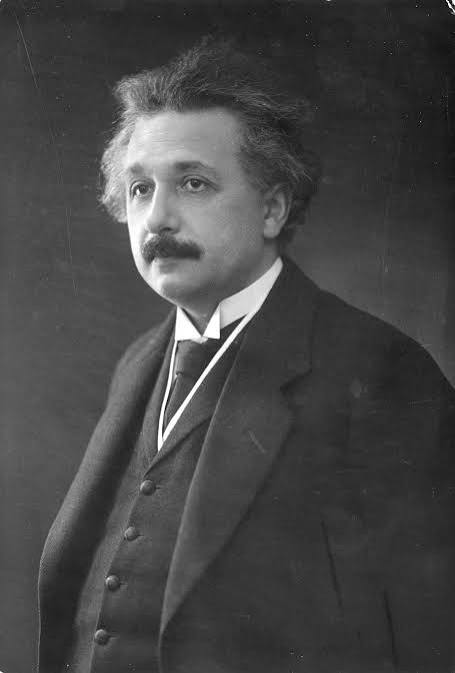
In 1902, Einstein had graduated from ETH Zurich, could not get a university job anywhere, and ran a newspaper ad in Bern offering tutoring to pay the rent. When Conrad Habicht and Maurice Solovine showed up, the three of them met in his small apartment over sausage, bread, cheese, and coffee to argue through Mach, Hume, Spinoza, and Poincaré until dawn. They named their table Akademie Olympia explicitly to mock pompous scientific academies, and Einstein even signed himself “Albert, Knight of the Backside, President of the Olympia Academy.”
Once his 1905 papers worked, universities were happy to borrow his prestige and claim him as one of their own. What they leave out is what he actually thought about how physics gets taught. Every physics PhD program in the world runs on exams. Einstein was completely against them, and it was not a passing comment; it was a core belief about what it takes to do physics:
“The hitch in this was, of course, the fact that one had to cram all this stuff into one’s mind for the examinations, whether one liked it or not. This coercion had such a deterring effect [upon me] that, after I had passed the final examination, I found the consideration of any scientific problems distasteful to me for an entire year. In justice I must add, moreover, that in Switzerland we had to suffer far less under such coercion, which smothers every truly scientific impulse, than is the case in many another locality.”
“It is, in fact, nothing short of a miracle that the modern methods of instruction have not yet entirely strangled the holy curiosity of inquiry; for this delicate little plant, aside from stimulation, stands mainly in need of freedom; without this it goes to wreck and ruin without fail. It is a very grave mistake to think that the enjoyment of seeing and searching can be promoted by means of coercion and a sense of duty. To the contrary, I believe that it would be possible to rob even a healthy beast of prey of its voraciousness, if it were possible, with the aid of a whip, to force the beast to devour continuously even when not hungry, especially if the food handed out under such coercion were to be selected accordingly.”
— Albert Einstein, “Autobiographical Notes,” in Albert Einstein: Philosopher-Scientist, ed. Paul Arthur Schilpp, vol. 1, pp. 16–18
Here at Académie Olympia we share Einstein’s view. There are no tests here, and we do not really recognize the concept of an exam as anything more than a ceremonial ritual of authority to join a guild. Exams have very little to say about whether someone can actually do physics. Educated at an elite physics university, our founder turned down the chance to pursue a PhD at an elite institution to focus on physics as craft, because institutions almost always get too caught up in political maneuvering to carry out the purpose on their own masthead.
Einstein was not in it for the prestige. He was in it for the craft, and so are we:
“I am happy because I want nothing from anyone. I do not care about money. Decorations, titles or distinctions mean nothing to me. I do not crave praise. The only thing that gives me pleasure, apart from my work, my violin, and my sailboat, is the appreciation of my fellow workers.”
— Albert Einstein, interview by George Sylvester Viereck, The Saturday Evening Post, October 26, 1929
Authority, Prestige & the Craft
What it means to be a scientist
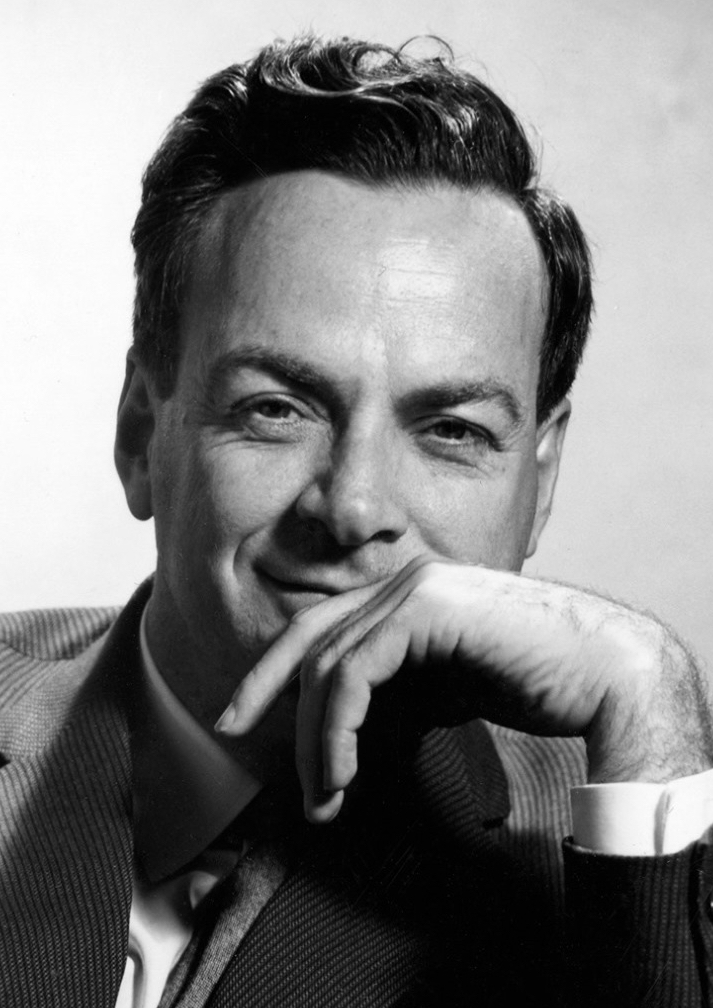
“I don’t like honors. I appreciate it for the work that I did, and for people who appreciate it, and I notice that other physicists use my work. I don’t need anything else. I don’t think there’s any sense to anything else. I don’t see that it makes any point that someone in the Swedish Academy decides that this work is noble enough to receive a prize.
I’ve already got the prize. The prize is the pleasure of finding the thing out, the kick in the discovery, the observation that other people use it. Those are the real things. The honors are unreal to me. I don’t believe in honors. It bothers me; honors bother me. Honors is epaulettes; honors is uniforms. My poppa brought me up this way. I can’t stand it; it hurts me.”
— Richard P. Feynman, The Pleasure of Finding Things Out
“When I was in high school, one of the first honors I got was to be a member of the Arista, which is a group of kids who got good grades. Everybody wanted to be a member of the Arista. I discovered that what they did in their meetings was to sit around to discuss who else was worthy to join this wonderful group that we are. OK, so we sat around trying to decide who would get to be allowed into this Arista. This kind of thing bothers me psychologically for one or another reason. I don’t understand myself.
Honors, and from that day to this, always bothered me. I had trouble when I became a member of the National Academy of Science, and I had ultimately to resign. Because there was another organization, most of whose time was spent in choosing who was illustrious enough to be allowed to join us in our organization. Including such questions as: ‘we physicists have to stick together because there’s a very good chemist that they’re trying to get in and we haven’t got enough room…’. What’s the matter with chemists? The whole thing was rotten. Because the purpose was mostly to decide who could have this honor. OK? I don’t like honors.”
— Richard P. Feynman, The Pleasure of Finding Things Out
“You ask me if an ordinary person—by studying hard—would get to be able to imagine these things like I imagine. Of course. I was an ordinary person who studied hard. There’s no miracle people. It just happens they got interested in this thing, and they learned all this stuff. They’re just people. There’s no talent or special miracle ability to understand quantum mechanics or a miracle ability to imagine electromagnetic fields that comes without practice and reading and learning and study. So if you take an ordinary person who’s willing to devote a great deal of time and study and work and thinking and mathematics, then he’s become a scientist.”
— Richard P. Feynman, Fun to Imagine (BBC, 1983)
“I am engaged now in a general program of study—I want to understand not just in a mathematical way the ideas of all branches of theoretical physics.”
— Richard P. Feynman, 1947 letter to Timothy Welton (quoted in S. S. Schweber, QED and the Men Who Made It, p. 406)
The Entrance Exam
Get in Touch
Earlier we said there are no tests here. That is almost true. There is one entrance exam to join the conversation: sincerity, honesty, and a genuine curiosity about theoretical physics.
No credentials required. Whether you want to discuss wave mechanics, point out where an idea breaks, or just talk physics, send a note here or write directly.