Research Proposal · Part One
Advanced Potential
“The scattering may, however, be toward both future and past times, an electron propagating backwards in time being recognized as a positron. This therefore suggests that negative energy components created by scattering in a potential be considered as waves propagating from the scattering point toward the past.”
In his textbook Introduction to Electromagnetism, David J. Griffiths gives the following description of advanced potentials: “although the advanced potentials are entirely consistent with Maxwell’s equations, they violate the most sacred tenet in all of physics: the principle of causality. They suggest that the potentials now depend on what the charge and the current distribution will be at some time in the future. The effect, in other words, precedes the cause. Although the advanced potentials are of some theoretical interest, they have no direct physical significance.”
In a footnote on the same page, he gives his justification for calling the advanced potential non-physical: “time asymmetry is introduced when we select the retarded potential in preference to the advanced ones, reflecting the (not unreasonable!) belief that the electromagnetic influences propagate forward, not backward, in time.”
If Griffiths is any guide, causality is an interesting question for two reasons:
- It is the most important axiom in physics.
- The proof given in the footnote is tautological.
Some might argue that the correctness of Griffiths’s description of causality is self-evident—that it is common sense. It is true that it has utility. Our brains are in essence machines that are adapted to predicting the future. That is their singular biological function, so it is natural that we frame correlations in reality in terms of our actions in the present and their ramifications in the future. You reap what you sow, after all. However, this turns out to be a limited view.
The following words of Laplace may serve as a useful primer for the argument that is to follow:
“We may regard the present state of the universe as the effect of its past and the cause of its future. An intellect which at a certain moment would know all forces that set nature in motion, and all positions of all items of which nature is composed, if this intellect were also vast enough to submit these data to analysis, it would embrace in a single formula the movements of the greatest bodies of the universe and those of the tiniest atom; for such an intellect nothing would be uncertain and the future just like the past could be present before its eyes.”
— Pierre-Simon Laplace
Laplace’s thought experiment was constructed to illustrate the meaning of determinism. By determinism we mean that a system’s initial conditions + the laws of physics = a unique outcome. The fate of the universe is “on rails,” so to speak.
This can be seen mathematically with Liouville’s Theorem, which states that the density of states in phase space is constant along the trajectories of the system. More simply: if you know the exact state of the universe on Monday, the laws of physics prescribe a unique, non-branching path that leads to Wednesday.
By proving that phase space volume is strictly conserved, Liouville showed that the mapping from Monday to Wednesday is bijective (one-to-one). For every single microstate on Wednesday, there is exactly one, and only one, corresponding microstate on Monday.
Geometrically this can be visualized as a unique path through phase space that traces its way through time. Because the path is unique, there is no way for the physical state on Monday to be disconnected from the physical state at all past and future times. This proves mathematically that Griffiths is incorrect: the state of a system now really does depend on its value in the future.
Research Proposal · Part Two
Structure of the Electron
“Today all these efforts appear rather wasted; theory has shifted the point of view, and at present the tendency is to circumvent the problem of self-energy rather than to solve it. But one day it will return to the center of the scene.”
The Wheeler–Feynman absorber theory is essentially Maxwell’s original theory of electromagnetism with the advanced potential left in. Restoring the advanced potential removes the infinite energy of the electron that arises when using only retarded potentials. From this we see that the infinite self-energy of the electron is the mathematical consequence of violating Liouville’s theorem.
There is a strong link between the infinite energy arising from the electron in (orthodox) classical E&M and the infinite energies in QED. Both classical electrodynamics and standard QED are built on a flawed physical assumption: the electron is a dimensionless, zero-radius point. This method is unlikely to satisfy in the future. We know this because the double slit experiment proves the electron is a wavelike object that extends physically in three-dimensional space.
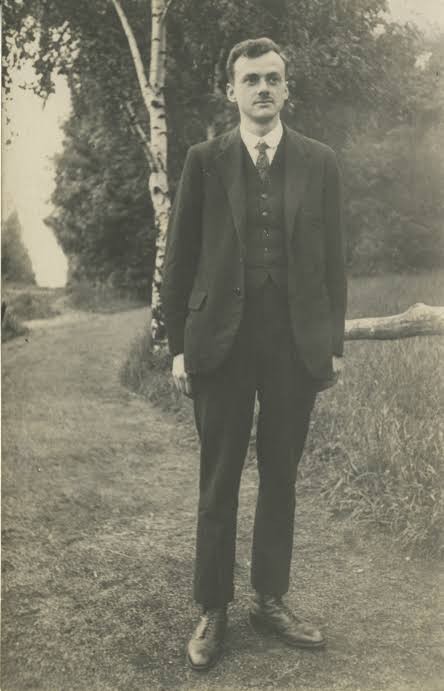
Dirac puts the situation this way:
“I might mention a third picture with which I have been dealing lately. It involves departing from the picture of the electron as a point and thinking of it as a kind of sphere with a finite size. Of course, it is really quite an old idea to picture the electron as a sphere, but previously one had the difficulty of discussing a sphere that is subject to acceleration and to irregular motion. It will get distorted, and how is one to deal with the distortions? I propose that one should allow the electron to have, in general, an arbitrary shape and size. There will be some shapes and sizes in which it has less energy than in others, and it will tend to assume a spherical shape with a certain size in which the electron has the least energy.
The future evolution of basic physics—that is to say, a development that will really solve one of the fundamental problems, such as bringing in the fundamental length or calculating the ratio of the masses—may require some much more drastic change in our physical picture. This would mean that in our present attempts to think of a new physical picture we are setting our imaginations to work in terms of inadequate physical concepts. If that is really the case, how can we hope to make progress in the future?”
— Paul A. M. Dirac
Earlier I argued for the abandonment of “the most sacred tenet in all of physics,” i.e., Griffiths’s definition of causality, and this is certainly a drastic change, but does it have relevance to the physical structure of the electron? That is to say, is it the right drastic change to rectify the self-energy paradox? Consider the following geometric picture of the electron provided by Wheeler and Feynman in their absorber theory paper: “The sphere converges, collapses on the source, and then pours out again as a divergent sphere. An observer in the neighborhood will gain the impression that this divergent wave originated from the source.” This is a beautiful analogy, but one could still picture the wave arising solely from an external field, collapsing to and diverging out again from a singular point nested within the field. David Bohm develops it further, ascribing the structure of the wave to the electron itself:
“Well, I could propose, for example, that the electron is not a particle as we usually think of it, but a process. This process I am assuming to take place in a general medium—a ‘field.’ In this field we will suppose there is a pulse, a wave which moves inward and converges to a point producing a very strong pulse and then diverges and falls away… In effect, it is actually something which is always forming and dissolving, and this may be the way in which it actually happens.”
— David Bohm
Bohm’s description of the electron as a dynamic entity suggests that it is stable in some conditions and not in others. There is a derivation by Gerald Hegerfeldt that proves an electron with only positive energy Fourier components (i.e., made up of only retarded waves) would have a propagation velocity faster than the speed of light. This supports the notion that a balance of advanced and retarded waves is necessary for the electron’s stability. Additionally, Bohm’s picture of the electron is compatible with Huygens’ Principle, which implies that every point on a wave front serves as a source of secondary wavelets. This is promising because Huygens’ Principle is the physical picture underlying Feynman’s path integral formalism and, by extension, modern QFT. This is exciting because it suggests we already have a physical concept to replace the “inadequate” point particle description.
“It would appear here that we have a contradiction with elementary ideas of causality. The electron seems to know about the pulse before it arrives and to get up an acceleration (as the equations of motion allow it to do), just sufficient to balance the effect of the pulse when it does arrive. The electron will, of course, radiate all the time it is accelerating and will thus be radiating before t = 0. The behaviour of our electron can be interpreted in a natural way, however, if we suppose the electron to have a finite size. There is then no need for the pulse to reach the centre of the electron before it starts to accelerate.”
— Paul A. M. Dirac, “Classical Theory of Radiating Electrons,” Proceedings of the Royal Society of London, Series A, Mathematical and Physical Sciences, vol. 167, no. 929, 1938, pp. 148–169
Research Proposal · Part Three
Quantum Waves, Classical Waves and QFT
Quantum mechanics suggests that the speed of light c is not an absolute barrier, but rather a statistical one. The meaning of this can be made clear by analogy to a classical situation: the speed of sound in water.
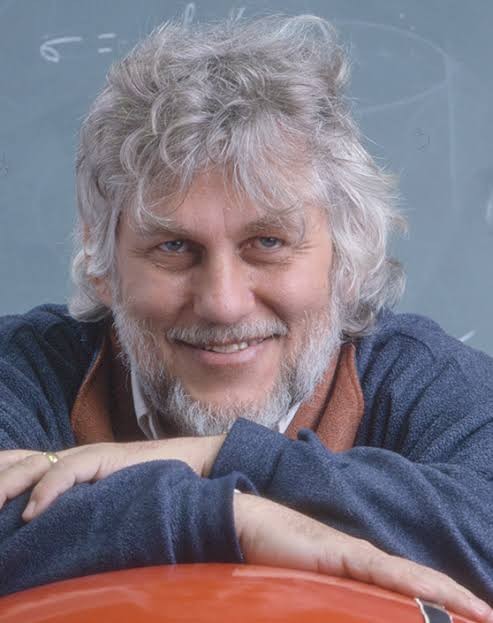
William Unruh created a classical analog for a black hole in a water tank, creating conditions in which the water flowed faster than the speed of sound. Conventional wisdom would suggest that sound waves cannot travel upstream in this case, but in reality the speed of sound is not an absolute cutoff for wave modes. Rather, it is a threshold at which exponential suppression takes over, so that wave modes that propagate beyond the speed of sound are exponentially suppressed.
Let’s look at the situation in the water tank mathematically. In the Unruh water tank, when you try to send a wave into the region of supersonic flow, the wave-number k transforms. The speed of sound in water corresponds to an effective speed of causality, where here we take causality to mean the speed at which momentum/energy can be transferred from a wave source to other particles in the medium. Inside the effective “future light cone” of the sound waves, k is a real number, giving you a standard, vibrating wave that propagates through space. But at the threshold of the event horizon, the solution to the dispersion relation changes. The wave-number k becomes purely imaginary. Unruh explains that these waves with imaginary wave-number correspond to exponentially damped solutions.
Now let us consider the mathematical structure of QFT. We will use Richard Feynman’s Quantum Mechanics and Path Integrals as a reference because the Feynman propagator is our most fundamental description of causality. On page 181 he writes:
“The transition element of the product of two positions, taken at two different times, contains more than just the product of the two corresponding positions along the classical path. There is a small additional term which is purely quantum mechanical in nature… that we developed such purely quantum mechanical results as that of Eqs. (7.64), wherein the extra correlation term is pure imaginary!”
— Richard P. Feynman and Albert R. Hibbs, Quantum Mechanics and Path Integrals, p. 181
This purely imaginary extra correlation term is exactly the same mathematical structure we saw in Unruh’s wave tank. The fact that the probability amplitude for signals to propagate beyond the light cone in both cases is not zero but exponentially damped suggests that the speed of light is not an absolute limit, but rather a dynamical boundary. I have chosen this question for investigation for multiple reasons:
- It derives something very fundamental (relativistic causality) which has previously been taken as a starting assumption.
- It is tractable. We have an unambiguous mathematical handhold on it in QFT as well as a clear classical analog in Unruh’s water tank.
It may (or may not) be obvious from the arguments presented here, but there is good reason to believe the structure of the electron is intimately bound up with statistical causality. In Newtonian mechanics, there is no intrinsic “speed of causality.” The speed of light c (also called the “speed of causality”) stands out as the defining and novel feature of special relativity. This “fundamental constant” arises ubiquitously in our most general equations. Deriving the speed of light from quantum mechanics, not just mathematically, but in terms of physical concepts, will link the two pillars of modern physics: wave mechanics and relativity. The union of these two will redefine our most primitive concepts: space, energy, and time.