Part 1 · Science or Religion?
Particles & Waves
“If I were forced to sum up in one sentence what the Copenhagen interpretation says to me, it would be ‘Shut up and calculate!’ But I won’t shut up. I would rather celebrate the strangeness of quantum theory than deny it, because I believe it still has interesting things to teach us about how certain powerful but flawed verbal and mental tools we once took for granted continue to infect our thinking in subtly hidden ways. I don’t think anybody, even Bohr, has done an adequate job of extracting these lessons. From this point of view the problem with the second generation’s ironfistedly soothing attitude is that by striving to make quantum mechanics appear so ordinary, so sedately, practical, so benignly humdrum, they deprive us of the stimulus for exploring some very intriguing questions about the limitations in how we think and how we are capable of apprehending the world… Einstein once wrote to Schrödinger that ‘the Heisenberg–Bohr tranquilizing philosophy—or religion?—is so delicately contrived that, for the time being, it provides a gentle pillow for the true believer.’”
David Mermin, What’s Wrong With This Pillow?
The Copenhagen Interpretation: Science or Religion?
“I happily concede that the electron may dissolve into a cloud. But then I would try to discover on which occasion this transformation occurs. If one wished to forbid me such an enquiry by invoking a principle, that would trouble me very much.”
Hendrik A. Lorentz, in G. Bacciagaluppi & A. Valentini (2009), Quantum Theory at the Crossroads: Reconsidering the 1927 Solvay Conference, Cambridge University Press, p. 433
It is often said that for a new theory to replace the Copenhagen interpretation it must produce a new experimental prediction which contradicts the Copenhagen method’s prediction. This is motivated reasoning, constructed to cover up the inherent flaws in the orthodox view. If one were to say that evolution was a lie, and that, in reality, the devil had put the dinosaur bones in the ground to fool us, one could not disprove that theory because in the final analysis it does predict the existence of dinosaur bones. But it violates the aesthetic sensibility of any true seeker of reality, and it is the same with the orthodox formulation of quantum mechanics.
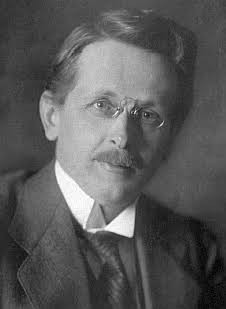
“The chief support of the theory is to be found less in that lent by observation hitherto than in its inherent logical consistency, in which it far transcends that of classical mechanics, and also in the fact that it solves the perplexing problem of gravitation and of the relativity of motion at one stroke in a manner highly satisfying to our reason.”
Hermann Weyl, Space-Time-Matter (1952), p. 247
“In 1957, Henry Margenau, a professor of physics and natural philosophy at Yale University, read a preprint of Everett’s thesis with pleasure. Subsequently, he sent the young theorist a paper he had recently written. In it, Margenau laid out his own case against wave function collapse, calling it, ‘a mathematical fiction… used persuasively by von Neumann and later by others who were able to derive from this fiction the correct formalism of quantum mechanics, thus adding another example to the vast array of scientific instances in which correct conclusions were deduced from insupportable premises… Current disbelief in the correctness of the present formulation of quantum mechanics has its source, at least in part, in the grotesque claim of the projection postulate.’
Nor did Margenau generally have kind words for Bohr: ‘Bohr does not ask science to make a choice—he asks science to resign itself to an eternal dilemma. He wants the scientist to learn to live while impaled on the horns of that dilemma, and that is not philosophically healthy advice. [Such dualism] relieves its advocates of the need to bridge a chasm in understanding by declaring that chasm to be unbridgeable and perennial; it legislates a difficulty into a norm.’”
Peter Byrne, The Many Worlds of Hugh Everett III: Multiple Universes, Mutual Assured Destruction, and the Meltdown of a Nuclear Family, pp. 110–111
Part One: Particles and Waves
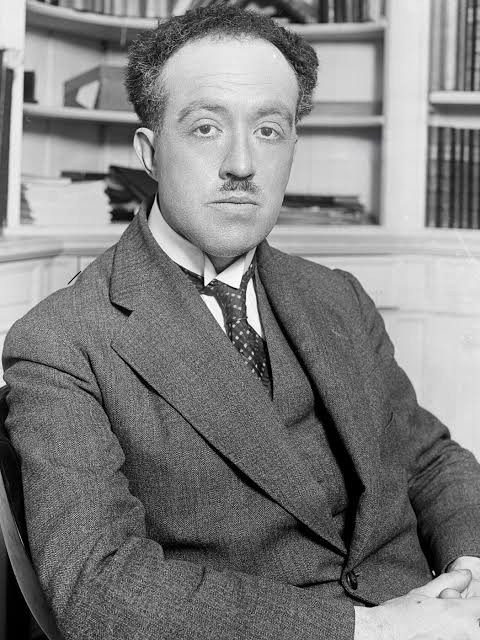
“Modern authors of textbooks on quantum mechanics usually ignore the basic idea underlying it. This becomes clear from the very fact that they prefer the term ‘quantum mechanics’ to ‘wave mechanics,’ though it is wave mechanics which is the foundation of all the mathematical developments of modern quantum theory. Without it and its wave equations, there might well have been no textbooks at all on quantum mechanics, and by ignoring the insight of the founders of wave mechanics, the authors of books on quantum mechanics are a little like children who disown their parents.”
Louis de Broglie, New Perspectives in Physics, p. 156
The distinction between “quantum mechanics” and “wave mechanics,” is a distinction between the discrete and the continuous or, more physically, a distinction between “particle like” and “wave like” behaviour. de Broglie is not the only quantum luminary to recognize the inadequacy of the particle-like description of wave mechanics. In a discussion with Niels Bohr, Erwin Schrödinger, inventor of wave mechanics, had this to say: “If we are going to stick to this damned quantum-jumping [wave function collapse], then I regret that I ever had anything to do with the quantum theory.”
The fundamental problem, as we have seen, is that the foundational equation of “quantum” mechanics is the Schrödinger wave equation and nowhere in the theory is there given a physical prescription for when this wave-like object ought to transition into a particle-like object. John von Neumann’s Mathematical Foundations of Quantum Mechanics (1932) was the first mathematical framework for quantum theory. In it he tackles wave function collapse directly:
“We therefore have two fundamentally different types of intervention… The boundary between the two [collapse and wave evolution] is arbitrary to a very large extent… It is shown that the boundary [of wave function collapse] can just as well be drawn between I and II + III as between I + II and III.”
John von Neumann, Mathematical Foundations of Quantum Mechanics (1932), pp. 351, 420–421
Where I is the quantum system to be observed, II is the measuring instrument, and III is the human observer.
Werner Heisenberg echoes von Neumann’s perspective:
“The discontinuous ‘reduction of wave-packets’, which cannot be derived from Schrödinger’s equations, is thus… a consequence of the transition from the possible to the actual. Of course it is entirely possible to imagine this transition… moved to an earlier point of time.”
Werner Heisenberg
Question: How is it possible that in the most foundational subject in all of physics (quantum mechanics) we have a process that is both fundamental and arbitrary? In other words, according to Heisenberg (one of the founders of the Copenhagen interpretation), collapse is non-physical. So then, if the Copenhagen interpretation is a theory of physics how can it have a non-physical process at its core? John Bell puts the situation this way:
“So long as the wave packet reduction is an essential component, and so long as we do not know exactly what and how it takes over from the Schrödinger equation, we do not have an exact and unambiguous formulation of our most fundamental physical theory.”
John S. Bell, Speakable and Unspeakable in Quantum Mechanics, p. 51
Part 2 · The Measurement Problem
What Is an Observer?
“Today, indeed, there are eminent physicists who under the compulsion of facts are inclined to sacrifice the principle of strict causality in the physical view of the world. If such a step should actually prove necessary the goal of physicists would become more remote; and this would be a disadvantage whose importance it is impossible to overestimate. For in my opinion, so long as any choice remains, determinism is in all circumstances preferable to indeterminism, simply because a definite answer to a question is always preferable to an indefinite one. So far as I can see, however, there is no ground for such a renunciation. For there always remains the possibility that the reason why it is impossible to give a definite answer resides, not in the nature of the theory, but in the manner in which the question is asked. If a question is inadequately formulated physically, the most perfect physical theory can give no definite answer… our view of the world must be purged progressively of all anthropomorphic elements. Consequently we have no right to admit into the physical world-view any concepts based in any way upon human measurement.”
Max Planck, The Universe in the Light of Modern Physics, pp. 27–28
In the Copenhagen description of quantum mechanics the wave function is said to “collapse” (i.e., physically transition from being a wave spread out in space into a particle localized at a point in space-time) when it is “observed” by an “observer”. Heisenberg explains:
“In the absence of an observer, the mathematical representation of the system would go on changing continuously… This discontinuous change is naturally not contained in the mechanical equations of the system… it corresponds exactly to the ‘reduction of wave-packets’ in the quantum theory.”
Werner Heisenberg
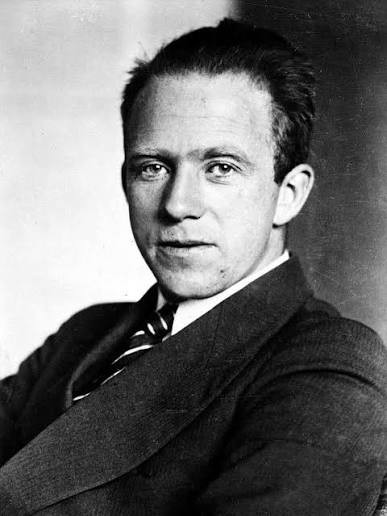
According to Heisenberg, the observer is that thing which collapses the wavefunction. But wait… we want to know under what physical conditions the wave function collapses. Defining observers as that thing which collapses the wave function and then defining collapse as what happens when the wave function is observed is circular. This definition suffers from an anthropocentric bias, requiring us to believe that a reality whose mechanics are provably wave-like (e.g., Young’s double-slit experiment), becomes discrete and particle-like particularly upon interaction with a human consciousness.
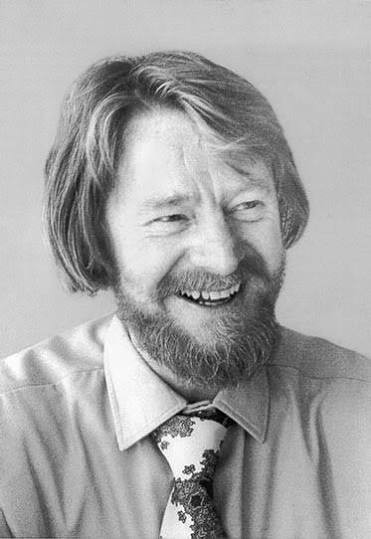
Richard Feynman criticizes this solipsistic perspective by highlighting the arbitrariness of assigning a special causal role to human beings:
“Do you seriously entertain the idea that without the observer there is no reality? Which observer? Any observer? Is a fly an observer? Is a star an observer? Was there no reality in the universe before 109 B.C. when life began? Or are you the observer? Then there is no reality to the world after you are dead? I know a number of otherwise respectable physicists who have bought life insurance.”
Richard P. Feynman
John Bell makes the same point:
“Was the world wave function waiting to jump [collapse] for thousands of millions of years until a single-celled living creature appeared? Or did it have to wait a little longer for some more highly qualified measurer — with a PhD?… are we not obliged to admit more or less ‘measurement-like’ processes are going on more or less all the time more or less everywhere? Is there ever a moment when there is no quantum jumping [wave function collapse] and the Schrödinger equation applies? The concept of ‘measurement’ becomes so fuzzy on reflection that it is quite surprising to have it appearing in a physical theory at the most fundamental level.”
John S. Bell, Speakable and Unspeakable in Quantum Mechanics, p. 117
Eugene Wigner, awarded the 1963 Nobel Prize in Physics for his contributions to nuclear and elementary particle theory, formulated a quantum thought experiment known as “Wigner’s friend” that addresses the role of the observer in quantum mechanics. You see, according to quantum mechanics, any time two electrons (or any “particle”) interact, they do so as waves, deterministically evolving according to the Schrödinger equation. If Wigner models his friend as having touched an electron he will do so using the wave equation for the electron in the tip of his friend’s finger and calculate how it sloshes together with the electron his friend is touching. He will calculate that his friend, being a wave-like object himself, has evolved into a “superposition” of many different states in relation to the electron he has touched. Applying the Copenhagen interpretation now becomes problematic as the question becomes whose consciousness (Wigner’s or his friend’s) collapses the wavefunction?
In Wigner’s own words:
“The theory of measurement, direct or indirect, is logically consistent so long as I maintain my privileged position as ultimate observer… If the atom is replaced by a conscious being, the wave function α(ψ1 × χ1) + β(ψ2 × χ2) (which also follows from the linearity of the equations) appears absurd because it implies that my friend was in a state of suspended animation before he answered my question… It follows that the being with a consciousness must have a different role in quantum mechanics than the inanimate measuring device: the atom considered above… The preceding argument for the difference in the roles of inanimate observation tools and observers with a consciousness—hence a violation of physical laws where consciousness plays a role—is entirely cogent as long as one accepts the tenets of orthodox quantum mechanics in all their consequences.”
Eugene P. Wigner, “Remarks on the Mind-Body Question,” in Symmetries and Reflections, pp. 180–181
Wigner’s thought experiment shows that today the mainstream interpretation of our most fundamental theory of physics (the Copenhagen interpretation) has a logical foundation that requires a violation of the concept of physical law itself. It is difficult to overstate the significance of this. The most fundamental physical entity (that we know of so far) is a wave, and the wave equation governing the evolution of this wave is deterministic. The Copenhagen interpretation asks us to believe that this wave evolves deterministically except when it interacts with human consciousness. This worldview treats the human animal not as a collection of molecules organized by millions of years of evolution but rather as an interdimensional interloper, made of some consciousness-matter with exotic properties from beyond the boundary of ordinary reality.
Here we see the answer to the question “The Copenhagen Interpretation: Science or Religion?” is religion. Science, at its best, gives us a deeper understanding of the relationship between things. The Copenhagen “Interpretation” is really an anti-interpretation because it insists that physicists accept on blind faith magical properties arbitrarily ascribed to the human animal.
Part 3 · From Particles to Waves
The Double Slit Experiment
“Nothing less is at stake here than the concept of the particle, the most elementary concept of classical mechanics… Quantum physics… analyses all motion into individual and periodic material waves… in this way it is based upon wave-mechanics.”
Max Planck, The Universe in the Light of Modern Physics, pp. 13, 16
“We choose to examine a phenomenon which is impossible, absolutely impossible, to explain in any classical way, and which has in it the heart of quantum mechanics. In reality, it contains the only mystery.”
The Feynman Lectures on Physics, Vol. III, Ch. 1: Quantum Behavior
The double slit experiment shows us that the trajectory of an electron that starts at A and travels through the left slit to reach the detector board at position C (A → left slit → C) is dynamically (causally) connected to the trajectory of an electron that starts at A and travels through the right slit to reach the detector board at position C (A → right slit → C). In sooth, the electron does not follow only these two particular paths but rather all intervening trajectories (A → all intervening paths → C). As illustrated in the idealized two-path example, the “individual” trajectories between A and C are not truly separate entities. In reality they are a network in which each part is inextricably intertwined with every other (in the language of quantum mechanics the paths are said to “interfere” with each other).
At first blush this is not profound. The deterministic structure of classical (Newtonian) physics already requires the trajectories of all particles to be correlated with each other to infinite precision (see Laplace’s Demon). The profundity is yet to come.
While our example (A → all intervening paths → C) describes an infinite number of intervening trajectories it is still idealized in the following sense: it assumes discrete (point-like) start and end points. In reality neither are discrete, but let’s focus on the non-discreteness of just the end point for the moment: (A → all intervening paths → all destinations). Note that the paths do not reach all destinations (atoms in the detector board) with equal density. Due to “interference” the paths cluster more densely along some trajectories/destinations and less so along others.
So far this is very good. The trouble arises in the orthodox definition of measurement. Let’s consider another two-path idealization:
Path two: (A → intervening path 2 → D)
Now, if we wish to calculate the probability of the electron taking path one to arrive at D we must also calculate the probability of it taking path 1 to arrive at C. In the probabilistic language of the orthodox interpretation these probabilities are real physical entities that interact dynamically with each other. Schrödinger will elaborate on this point of tension between his picture of the wave as a real physical entity and the Copenhagen interpretation’s contradictory approach of treating the waves as physically real for the purposes of predicting the outcomes of experiments only to then assume the wave ceases to exist when it interacts with the arbitrarily defined “observer”.
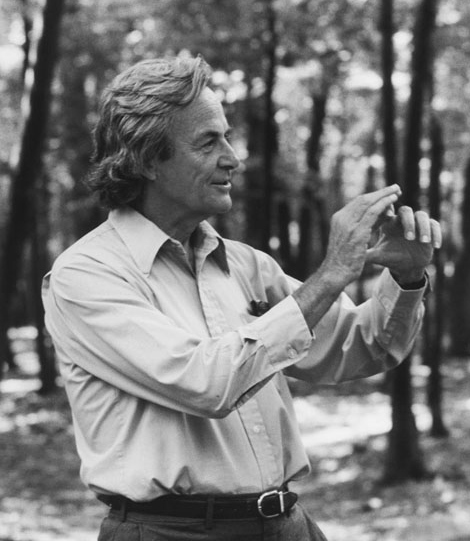
For now let’s end this section with some words from Feynman which validate the overall framing that the electron really does travel along all of the paths through space between its start and destination, and that the paths are just a way of viewing a wave propagating through space:
“Now we can give the quantum-mechanical rule. We must say how much each trajectory contributes to the total amplitude to go from a to b. It is not just the particular path of extreme action that contributes; rather, all the paths contribute. They contribute equal magnitudes to the total amplitude, but contribute at different phases. The phase of the contribution for a given path is the action S for that path in units of the quantum of action ℏ… all paths contribute equally, although their phases vary, so it is not clear how, in the classical limit, some particular path becomes most important… The net amplitude to arrive at this position x′ at the time T + t′ can be considered as the sum of contributions from every trajectory that goes from the origin to the final point.”
Richard P. Feynman & Albert R. Hibbs, Quantum Mechanics and Path Integrals, pp. 28, 29, 47
Part 4 · Schrödinger’s Critique
Waves of Probability?
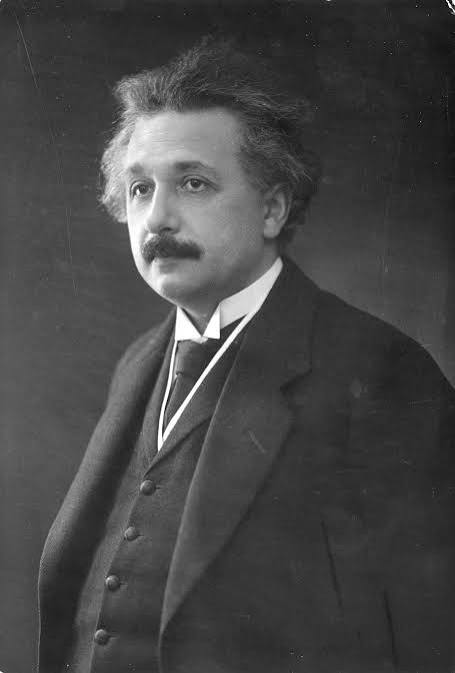
“You are the only contemporary physicist, besides Laue, who sees that one cannot get around the assumption of reality—if only one is honest. Most of them simply do not see what sort of risky game they are playing with reality… it seems certain to me that the fundamentally statistical character of the theory is simply a consequence of the incompleteness of the description.”
Albert Einstein, 1950 letter to Erwin Schrödinger, in Letters on Wave Mechanics: Albert Einstein, Erwin Schrödinger, Max Planck, and H. A. Lorentz, pp. 39–40
How can probabilities have a physical influence (i.e., interact deterministically with each other) as though they were real physical entities? This is what the Copenhagen interpretation says is happening in between measurements.
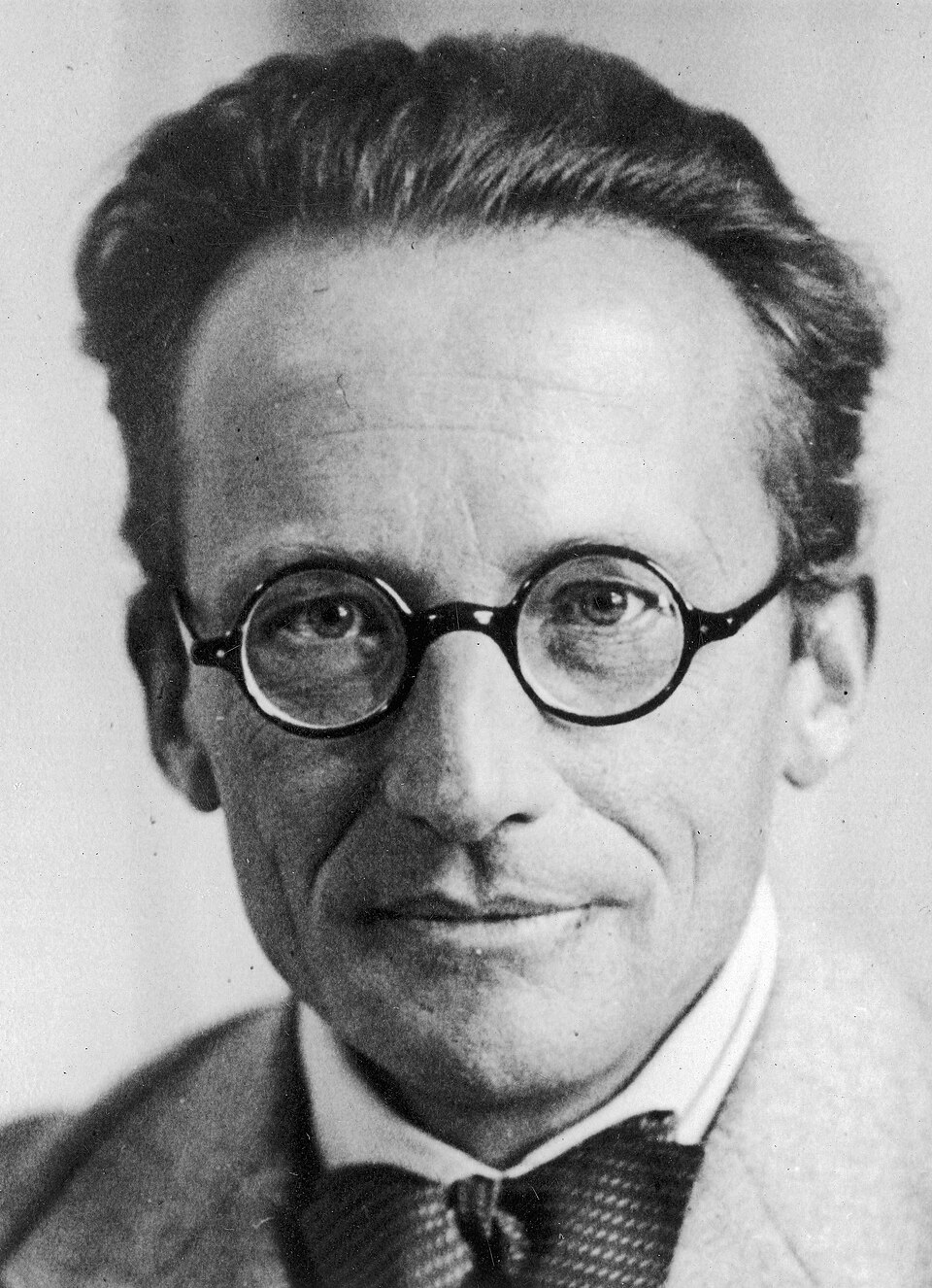
“The waves, so we are told, must not be regarded as quite real waves. It is true that they produce interference patterns—which is the crucial test that in the case of light had removed all doubts as to the reality of the waves. However, we are now told that all waves, including light, ought rather to be looked upon as ‘probability waves.’ They are only a mathematical device for computing the probability of finding a particle in certain conditions, for instance (in the above example), the probability of an electron hitting the photographic plate within a small specified area. There it is registered by acting on a grain of silver bromide. The interference pattern is to be regarded as a statistical registration of the impinging electrons. The waves are in this context sometimes referred to as guiding waves—guiding or directing the particles on their paths. The guidance is not to be regarded as a rigid one; it merely constitutes a probability. The clear-cut pattern is a statistical result, its definiteness being due to the enormous number of particles.
Here I cannot refrain from mentioning an objection which is too obvious not to occur to the reader. Something that influences the physical behavior of something else must not in any respect be called less real than the something it influences—whatever meaning we may give to the dangerous epithet ‘real.’ It is certainly useful to recall at times that all quantitative models or images conceived by the physicist are, epistemologically, only mathematical devices for computing observable events, but I cannot see that this applies more to, say, light waves than to, say, oxygen molecules… I believe the situation is this. We have taken over from previous theory the idea of a particle and all the technical language concerning it. This idea is inadequate. It constantly drives our mind to ask information which has obviously no significance. Its imaginative structure exhibits features which are alien to the real particle. An adequate picture must not trouble us with this disquieting urge; it must be incapable of picturing more than there is; it must refuse any further addition. Most people seem to think that no such picture can be found. One may, of course, point to the circumstantial evidence (which I am sorry to say is not changed by this essay) that in fact none has been found. I can, however, think of some reasons for this, apart from the genuine intricacy of the case. The palliative, taken from positivist philosophy and purporting to be a reasonable way out, was administered fairly early and authoritatively. It seemed to relieve us from the search for what I should call real understanding; it even rendered the endeavor suspect, as betraying an unphilosophical mind—the mind of a child who regretted the loss of its favorite toy (the picture or model) and would not realize that it was gone forever. As a second point, I submit that the difficulty may be intimately connected with the principal subject of this paper, to which I shall now turn without further delay. The uncertainty relation refers to the particle. The particle, as we shall see, is not an identifiable individual. It may indeed well be that no individual entity can be conceived which would answer the requirements of the adequate picture stated above… A piece of matter is the name we give to a continuous string of events that succeed each other in time… This explains that, in favorable circumstances, long strings of successively occupied states may be produced, similar to those contemplated in sections 7 and 8. Such a string gives the impression of an identifiable individual, just as in the case of any object in our daily surrounding. It is in this way that we must look upon the tracks in the cloud chamber or in a photographic emulsion, and on the (practically) simultaneous discharges of Geiger counters set in a line, which discharges we say are caused by the same particle passing one counter after another. In such cases it would be extremely inconvenient to discard this terminology. There is, indeed, no reason to ban it, provided we are aware that, on sober experimental grounds, the sameness of a particle is not an absolute concept. It has only a restricted significance and breaks down completely in some cases. In what circumstances this restricted sameness will manifest itself is fairly obvious: namely, when only few states are occupied in the region of the state-manifold with which we are concerned, or, in other words, when the occupied states are not too crowded in that region, or when occupation is a rare event—the terms ‘few,’ ‘crowded,’ and ‘rare’ all referring to the state-manifold. Otherwise, the strings intermingle inextricably and reveal the true situation.”
Erwin Schrödinger, What Is an Elementary Particle?
Notice how clearly Schrödinger diagnoses the modern anti-reality reflex: “Something that influences the physical behavior of something else must not in any respect be called less real than the something it influences—whatever meaning we may give to the dangerous epithet ‘real.’… The palliative, taken from positivist philosophy and purporting to be a reasonable way out, was administered fairly early and authoritatively. It seemed to relieve us from the search for what I should call real understanding; it even rendered the endeavor suspect.” Even the familiar academic habit of treating the word “reality” as suspect is anticipated directly by Schrödinger.
Let’s consider another of Schrödinger’s papers:
“A theoretical science… where the initiated continue musing to each other in terms that are, at best, understood by a small group of close fellow travellers, will necessarily be cut off from the rest of cultural mankind; in the long run it is bound to atrophy and ossify, however virulently esoteric chat may continue within its joyfully isolated groups of experts… What has all this to do with quantum jumps?… I am thinking of the theory of epicycles. I confess to the heretical view that their modern counterpart in physical theory are the quantum jumps. Or rather these correspond to the circles which the sun, the moon and the stars were thought to describe around the earth in 24 hours after earlier and better knowledge had been condemned. I am reminded of epicycles of various orders when I am told of the hierarchy of virtual quantum transitions… When we hear the same words again and again pronounced with authority, we are apt to forget that they were originally meant as an abbreviation; we are induced to believe that they describe a reality… One might say, why not, if this interpretation works and if it is consistent? I maintain that it is inconsistent… the current view, which privileges the ‘sharp energy states,’ is self-contradictory, anyhow in the language it uses (what people mean, when they say something else than they mean, is difficult to guess). We found it self-contradictory in that it cannot be maintained for both the whole and the parts.”
Erwin Schrödinger, Are There Quantum Jumps?: Part I
Schrödinger continues in part 2 of this paper:
“I do not regret to say, we sorely need those spherical waves as realities (not merely as expressing our lack of knowledge), if we wish to account, e.g. for G. P. Thomson’s beautiful experiments on the interference patterns of de Broglie waves, diffracted by crystals; and the same in many, many other cases… before that there are many experiments which we simply cannot account for without taking the wave to be a wave, acting simultaneously throughout the region over which it spreads, not ‘perhaps here’ or ‘perhaps there,’ as the probability view would have it… To give an example: if one scans the introductory chapters of Max von Laue’s standard works on the diffraction of X-rays and on the diffraction of material waves, one finds that no pattern of thought has yet been discovered to get on in these matters even one step without regarding the wave functions—Maxwell’s field and the de Broglie amplitudes of both the incident wave and those it encounters in the diffracting body—as describing something real. Here ‘real’ is not a controversial philosophical term. It means that the wave acts simultaneously throughout the whole region it covers, not either here or there. That would fail to account for the interference phenomena. So the epithet ‘real’ means the momentous difference between ‘both-and’ (et-et) and ‘either-or’ (aut-aut). I challenge anyone to dispute this discrepancy away, if he can. I do not think there is any escape from this: if you accept the current probability view (aut-aut) in quantum mechanics, the single-event observation becomes comparatively easy to tackle, but all the rest of physics (unfashionable at the moment) is lost to sight.”
Erwin Schrödinger, Are There Quantum Jumps?: Part II
Part 5 · The Universal Wave Function
What Are the Waves Really Made Of?
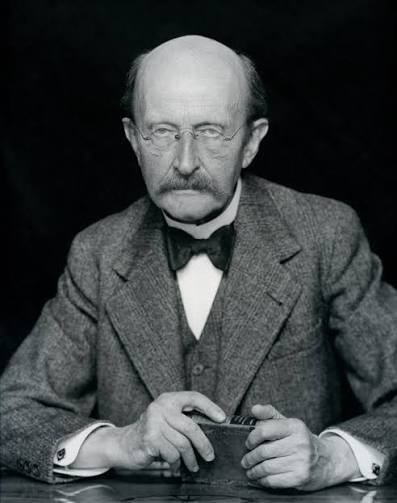
“I myself experienced during the 80’s and 90’s of the last century what the feelings of a student are who is convinced that he is in possession of an idea which is in fact superior, and who discovers that all the excellent arguments advanced by him are disregarded simply because his voice is not powerful enough to draw the attention of the scientific world… many important ideas began by existing in the dark, uncomprehended by the many.”
Max Planck, The Philosophy of Physics, pp. 52, 57
Hugh Everett III’s work is, to me, the most beautiful scientific discovery in the history of our species. While Everett was not as prolific as Einstein, he succeeded in solving a problem that had stumped the concerted efforts of the smartest minds in the physics community for 30 years. He did this not through sheer willpower or genius but rather by seeing the problem as a kind of game. His playful attitude towards physics endears him to me and he is one of my heroes.
“Associate Professor of Mathematics at Catholic University, William W. Boone, wrote, ‘This is a once-in-a-lifetime recommendation for I think it most unlikely that I shall ever again encounter a student I can give such complete and unreserved support. Everett is by far the best student I have had at Princeton, Rutgers, or Catholic University. Everett has a better knowledge of mathematics than most of the graduate students at Catholic University and probably no graduate student is his equal in native ability. Since his sophomore year he had been taking advanced mathematics courses—combinatorial topology, point set topology, real and complex variables, modern algebra, etc.—many simply as an auditor because of the administrative limitations on the number of hours a student may carry. In all of these courses he has given an outstanding performance, showing a thorough and frequently creative mastery of the subject. Everett also has worked widely on sophisticated mathematical texts of his own…. (This year, by the way, he has been taking for credit the game theory course given by Princeton University’s Professor [Albert] Tucker at American University.)’”
Peter Byrne, The Many Worlds of Hugh Everett III: Multiple Universes, Mutual Assured Destruction, and the Meltdown of a Nuclear Family, p. 38
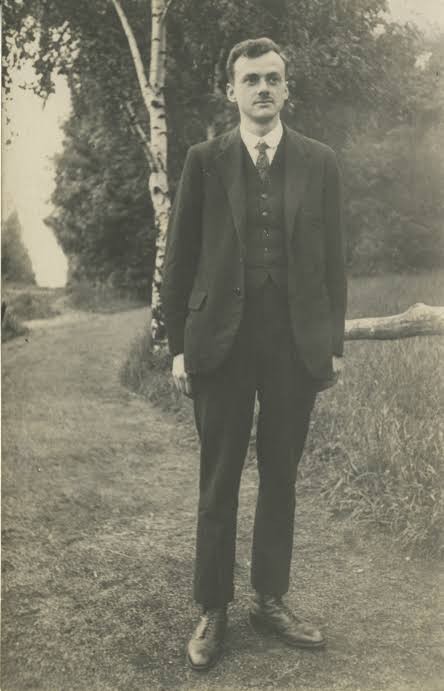
“When one looks back over the development of physics, one sees that it can be pictured as a rather steady development with many small steps and superposed on that a number of big jumps. Of course it is these big jumps which are the most interesting feature of this development. The background of steady development is largely logical, people are working out the ideas which follow from the previous set-up according to standard methods. But then, when we have a big jump, it means that something entirely new has to be introduced. These big jumps usually consist in overcoming a prejudice. We have had a prejudice from time immemorial; something which we have accepted without question, as it seems so obvious. And then a physicist finds that he has to question it, he has to replace this prejudice by something more precise, and leading to some entirely new conception of nature.”
Paul A. M. Dirac, “Development of the Physicist’s Conception of Nature,” in The Physicist’s Conception of Nature, ed. Jagdish Mehra (Dordrecht: D. Reidel, 1973), pp. 1–14
We see that overcoming prejudice is precisely Everett’s motivation in his work on quantum mechanics.
“Fifteen years after the thesis was published, Everett penned a letter (found in the basement) to Max Jammer, who was writing his book on the philosophy of quantum mechanics. Everett told Jammer that ‘the principle intellectual influences’ on the development of his theory were Misner, Petersen, and Wheeler. The latter ‘encouraged me to pursue the matter further as a thesis. During the course of this pursuit I would say that perhaps the primary influences were von Neumann’s book and the later chapters of Bohm’s Introduction to Quantum Mechanics [sic]. I must answer in all candor the primary motive was, of course, to obtain a thesis. However, I must also admit to a strong secondary motive to resolve what appeared to me to be inherent inconsistencies in the conventional interpretation.
I was of course struck, as many before and also many since, by the apparent paradox raised by the unique role assumed by the measurement process in quantum mechanics as it was conventionally espoused. It seemed to me unnatural that there should be a ‘magic’ process in which something quite drastic occurred (collapse of the wave function), while in all other times systems were assumed to obey perfectly natural continuous laws.’”
Peter Byrne, The Many Worlds of Hugh Everett III: Multiple Universes, Mutual Assured Destruction, and the Meltdown of a Nuclear Family, pp. 132–133
Feynman articulates the need for Everett’s reformulation of quantum mechanics:
“The usual separation of observer and observed which is now needed in analyzing measurements in quantum mechanics should not really be necessary, or at least should be even more thoroughly analyzed. What is needed is the statistical mechanics of amplifying apparatus.”
Richard P. Feynman & Albert R. Hibbs, Quantum Mechanics and Path Integrals, p. 23
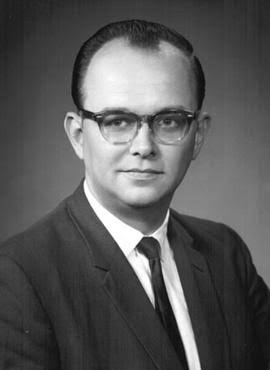
Let’s start with the solution:
“What happens, asked Everett, when a quantum mechanical observer looks at the quantum mechanical needle (or ‘pointer’) of a meter that correlates with a superposed quantum object? Say, a particle the wave function of which describes a superposition of possible positions.
‘Why doesn’t our observer see a smeared out needle? The answer is quite simple. He behaves just like the apparatus did. When he looks at the needle (interacts) he himself becomes smeared out, but at the same time correlated to the apparatus, and hence to the system…. The observer himself has split into a number of observers, each of which sees a definite result of the measurement…. As an analogy one can imagine an intelligent amoeba with a good memory. As time progresses the amoeba is constantly splitting, each time the resulting amoebas having the same memories as the parent. Our amoeba does not have a life line, but a life tree. The question of the identity or non identity of two amoebas at a later time is somewhat vague. At any time we can consider two of them, and they will possess common memories up to a point (common parent) after which they will diverge according to their separate lives thereafter.’”
Hugh Everett III, as quoted in Peter Byrne, The Many Worlds of Hugh Everett III, p. 138
Now to the technical arguments.
“The question of the consistency of the scheme arises if one contemplates regarding the observer and his object-system as a single (composite) physical system. Indeed, the situation becomes quite paradoxical if we allow for the existence of more than one observer. Let us consider the case of one observer A, who is performing measurements upon a system S, the totality (A + S) in turn forming the object-system for another observer, B. If we are to deny the possibility of B’s use of a quantum mechanical description (wave function obeying wave equation) for A + S, then we must be supplied with some alternative description for systems which contain observers (or measuring apparatus). Furthermore, we would have to have a criterion for telling precisely what type of systems would have the preferred positions of ‘measuring apparatus’ or ‘observer’ and be subject to the alternate description. Such a criterion is probably not capable of rigorous formulation.”
Hugh Everett III, The Theory of the Universal Wave Function, in The Many-Worlds Interpretation of Quantum Mechanics, ed. Bryce S. DeWitt & Neill Graham, p. 4
“There does not, in general, exist anything like a single state for one subsystem of a composite system. That is, subsystems do not possess states independent of the states of the remainder of the system, so that the subsystem states are generally correlated. One can arbitrarily choose a state for one subsystem, and be led to the relative state for the other subsystem. Thus we are faced with a fundamental relativity of states, which is implied by the formalism of composite systems. It is meaningless to ask the absolute state of a subsystem — one can only ask the state relative to a given state of the remainder of the system.”
Hugh Everett III, The Theory of the Universal Wave Function, p. 43
“This property, that the relative system states become approximate eigenstates of the measurement, is in fact common to all measurements… the relative system states tend to become eigenstates as the interaction proceeds… The discontinuous ‘jump’ into an eigenstate is thus only a relative proposition, dependent upon our decomposition of the total wave function into the superposition, and relative to a particularly chosen apparatus value. So far as the complete theory is concerned all elements of the superposition exist simultaneously, and the entire process is quite continuous… It therefore holds for any system of quantum mechanics for which the superposition principle holds, both particle and field theories, relativistic or not, and is applicable to all physical systems, regardless of size… Suppose, for example, that we coupled a spin measuring device to a cannonball, so that if the spin is up the cannonball will be shifted one foot to the left, while if the spin is down it will be shifted an equal distance to the right. If we now perform a measurement with this arrangement upon a particle whose spin is a superposition of up and down, then the resulting total state will also be a superposition of two states, one in which the cannonball is to the left, and one in which it is to the right. There is no definite position for our macroscopic cannonball!
This behavior seems to be quite at variance with our observations, since macroscopic objects always appear to us to have definite positions. Can we reconcile this prediction of the purely wave mechanical theory with experience, or must we abandon it as untenable? In order to answer this question we must consider the problem of observation itself within the framework of the theory.”
Hugh Everett III, The Theory of the Universal Wave Function, in DeWitt & Graham, pp. 59–62
“Centers of the square amplitude distributions for the objects will move in a manner approximately obeying the laws of motion of classical mechanics, with the degree of approximation depending upon the masses and the length of time considered, as is well known. (Note that we do not mean to imply that the wave packets of the individual objects remain independent if they are interacting. They do not. The motion that we refer to is that of the centers of the marginal distributions for the centroids of the bodies.) The general state of a system of macroscopic objects does not, however, ascribe any nearly definite positions and momenta to the individual bodies. Nevertheless, any general state can at any instant be analyzed into a superposition of states each of which does represent the bodies with fairly well defined positions and momenta. Each of these states then propagates approximately according to classical laws, so that the general state can be viewed as a superposition of quasi-classical states propagating according to nearly classical trajectories. In other words, if the masses are large or the time short, there will be strong correlations between the initial (approximate) positions and momenta and those at a later time, with the dependence being given approximately by classical mechanics… The observer will not become aware of the fact that the state does not correspond to definite positions and momenta (i.e., he will not see the objects as ‘smeared out’ over large regions of space) but will himself simply become correlated with the system — after the observation the composite system of objects + observer will be in a superposition of states, each element of which describes an observer who has perceived that the objects have nearly definite positions and momenta, and for whom the relative system state is a quasi-classical state in the previous sense, and furthermore to whom the system will appear to behave according to classical mechanics if his observation is continued. We see, therefore, how the classical appearance of the macroscopic world to us can be explained in the wave theory… No matter what the complexity or exact mechanism of a measuring process, the general superposition principle as stated in Chapter III remains valid, and our abstract discussion is unaffected. It is a vain hope that somewhere embedded in the intricacy of the amplification process is a mechanism which will somehow prevent the macroscopic apparatus state from reflecting the same indefiniteness as its object-system.”
Hugh Everett III, The Theory of the Universal Wave Function, in DeWitt & Graham, pp. 89, 90, 94
“The Copenhagen interpretation. This is the interpretation developed by Bohr. The psi function is not regarded as an objective description of a physical system (i.e., it is in no sense a conceptual model), but is regarded as merely a mathematical artifice which enables one to make statistical predictions… Another objectionable feature of this position is its strong reliance upon the classical level from the outset, which precludes any possibility of explaining this level on the basis of an underlying quantum theory. (The deduction of classical phenomena from quantum theory is impossible simply because no meaningful statements can be made without pre-existing classical apparatus to serve as a reference frame.) This interpretation suffers from the dualism of adhering to a ‘reality’ concept (i.e., the possibility of objective description) on the classical level but renouncing the same in the quantum domain…
The wave interpretation. This is the position proposed in the present thesis, in which the wave function itself is held to be the fundamental entity, obeying at all times a deterministic wave equation. This view also corresponds most closely with that held by Schrödinger. However, this picture only makes sense when observation processes themselves are treated within the theory. It is only in this manner that the apparent existence of definite macroscopic objects, as well as localized phenomena, such as tracks in cloud chambers, can be satisfactorily explained in a wave theory where the waves are continually diffusing. With the deduction in this theory that phenomena will appear to observers to be subject to Process 1, Heisenberg’s criticism of Schrödinger’s opinion — that continuous wave mechanics could not seem to explain the discontinuities which are everywhere observed — is effectively met. The ‘quantum-jumps’ exist in our theory as relative phenomena (i.e., the states of an object-system relative to chosen observer states show this effect), while the absolute states change quite continuously… However, from the standpoint of our theory, it is not so much the system which is affected by an observation as the observer, who becomes correlated to the system.
In the case of observation of one system of a pair of spatially separated, correlated systems, nothing happens to the remote system to make any of its states more ‘real’ than the rest. It had no independent states to begin with, but a number of states occurring in a superposition with corresponding states for the other (near) system. Observation of the near system simply correlates the observer to this system, a purely local process — but a process which also entails automatic correlation with the remote system. Each state of the remote system still exists with the same amplitude in a superposition, but now a superposition for which each element contains, in addition to a remote system state and correlated near system state, an observer state which describes an observer who perceives the state of the near system.
In conclusion, we have seen that if we wish to adhere to objective descriptions then the principle of the psycho-physical parallelism requires that we should be able to consider some mechanical devices as representing observers. The situation is then that such devices must either cause the probabilistic discontinuities of Process 1 [wave function collapse], or must be transformed into the superpositions we have discussed. We are forced to abandon the former possibility since it leads to the situation that some physical systems would obey different laws from the rest, with no clear means for distinguishing between these two types of systems. We are thus led to our present theory which results from the complete abandonment of Process 1 as a basic process. Nevertheless, within the context of this theory, which is objectively deterministic, it develops that the probabilistic aspects of Process 1 reappear at the subjective level, as relative phenomena to observers.”
Hugh Everett III, The Theory of the Universal Wave Function, in DeWitt & Graham, pp. 110, 111, 115–117
Part 6 · Censorship in Copenhagen
“Because I Sat Down With Everett and Told Him What to Say”
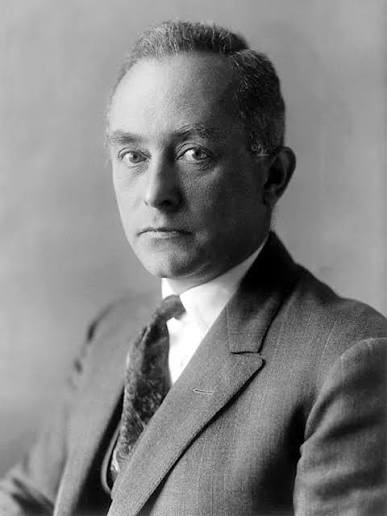
“The lesson to be learned from what I have told of the origin of quantum mechanics is that probable refinements of mathematical methods will not suffice to produce a satisfactory theory, but that somewhere in our doctrine there lurks a concept, not justified by any experience, which will have to be eliminated in order to clear the way.”
Max Born, Physics in My Generation, p. 98 (italics mine)
The logical arguments in favor of Hugh Everett’s interpretation vs. the Copenhagen interpretation are as lopsided as the argument for Evolution vs. Creationism. But if this is the case how can it be that Everett’s views have not been accepted as physical fact? Certainly they are not taught to physics undergraduates as a reality. My undergraduate quantum textbook, Introduction to Quantum Mechanics (third edition) by David J. Griffiths is almost wholly composed of mathematical formalism and only mentions physical interpretations in a short section at the end of the book.
I do not believe, as many others do, that quantum theory is particularly abstract or complicated. Certainly mathematics is sometimes needed to predict results but this is as true in classical mechanics as it is in quantum problems. In terms of physical interpretation quantum mechanics is quite intuitive, if only it is taught as a physical reality. The supposed lack of a single clear interpretation (e.g., Bohmian mechanics, vs. Copenhagen, vs. Everett, etc.) is an illusion. The result of a political power struggle for scientific authority, not logical thought.
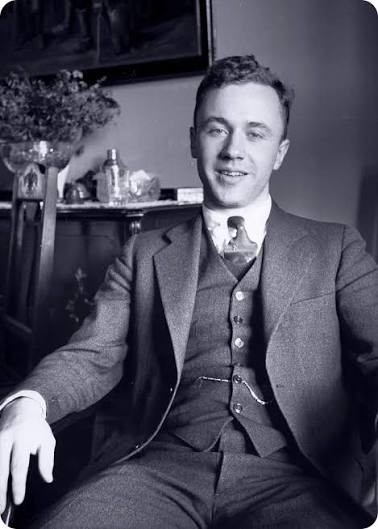
“In January 1956, Everett submitted his typed, 137-page dissertation to Wheeler (the ‘long’ thesis), now entitled, ‘Quantum Mechanics by the Method of the Universal Wave Function.’ A few months later, after a minor revision, bound copies entitled ‘Wave Mechanics Without Probability’ were distributed to select physicists, including Bohr.
In April, Wheeler wrote to Bohr: ‘I would be appreciative of comments by you and Aage Petersen about the work of Everett…. The title itself, “Wave Mechanics Without Probability”, like so many of the ideas in it need further analysis and rephrasing, as I know Everett would be the first to say. But I am more concerned with your reaction to the more fundamental question, whether there is any escape from a formalism like Everett’s when one wants to deal with a situation where several observers are at work, and wants to include the observers themselves in the system that is to receive mathematical analysis.’
In May, Wheeler visited Bohr in Copenhagen and presented the case for Everett’s theory. Bohr and his circle vehemently rejected it.”
Peter Byrne, The Many Worlds of Hugh Everett III: Multiple Universes, Mutual Assured Destruction, and the Meltdown of a Nuclear Family, p. 137
But Bohr’s reaction went beyond rejecting the work intellectually in the public forum. From a political power perspective this is understandable given that Everett’s views are correct and open discussion with him would have revealed that Bohr’s views were inconsistent. What happens next mirrors the “sharp reception” we saw Bohm receive in section two.
“In the beginning, Wheeler was Everett’s champion. The publication of his thesis in Reviews of Modern Physics was accompanied by his advisor’s glowing assessment: ‘It is difficult to make clear how decisively the “relative state” formulation drops classical concepts. One’s initial unhappiness at this step can be matched but few times in history: when Newton described gravity by anything so preposterous as action at a distance; when Maxwell described anything as natural as action at a distance in terms as unnatural as field theory; when Einstein denied a privileged character to any coordinate system, and the whole foundations of physical measurement at first sight seemed to collapse…. No escape seems possible from this relative state formulation…. [It] does demand a totally new view of the foundational character of physics.’
But the paper printed in Reviews of Modern Physics was drastically abridged from the original thesis submitted to Wheeler in January 1956. Everett was displeased by the final product. He never published another word on quantum mechanics. Wheeler’s initial support for Everett was born of a scientific agenda: quantizing gravity. And for this project, Everett’s formulation of a universal wave function was useful, provided that its baggage—a non-denumerable infinity of branching worlds—could be, somehow, lightened. But Wheeler was not going to sign off on the thesis until Bohr had a chance to weigh in. And after Bohr rejected it, Wheeler insisted that Everett cut and rewrite it on pain of losing his degree. Under the professor’s close supervision, three-quarters of the original was excised or condensed. One of the first sentences to go was Everett’s dismissal of the Copenhagen interpretation as ‘developed by Bohr,’ because it treated the wave function as ‘merely a mathematical artifice.’ The basic critique of von Neumann’s collapse postulate remained intact, but metaphors of splitting cannonballs and observers vanished, leaving the concept of multiple universes in the formalism, but not in the language. And the entire chapter on information and probability disappeared, along with most of its argument.
When the thesis was revamped to Wheeler’s satisfaction, he waxed most eloquently, publicly comparing his student’s work to the achievements of Newton, Maxwell, and Einstein. Not everybody agreed with him, to say the least (especially not Bohr and his circle in Copenhagen). But as the many worlds interpretation gradually gained credence and popularity over the next few decades, Wheeler ceased advocating for, and eventually disparaged it.
Misner explains Wheeler’s dilemma: ‘John Wheeler got along with everybody. But in Hugh’s case, Wheeler had a very difficult time applying his usual tactics because he couldn’t just encourage Hugh to follow his ideas and present them as powerfully as possible since they ran contrary to Bohr’s ideas. And Wheeler regarded Bohr as his most important mentor… He was a man he really respected and bowed to.’… it was not a wise career move to question Bohr on such a fundamental issue as the usefulness of complementarity… [Wheeler] wrote to Everett: ‘After my arrival the three of us had three long and strong discussions about [your thesis]…. Stating conclusions briefly, your beautiful wave function formalism of course remains unshaken; but all three of us feel that the real issue is the words that are to be attached to the quantities of the formalism. We feel that complete misinterpretation of what physics is about will result unless the words that go with the formalism are drastically revised.’
Wheeler urged Everett to struggle it out in Copenhagen directly with Bohr. And he warned Everett that he would not schedule his final exam ‘until this whole issue of words is straightened out.’”
Peter Byrne, The Many Worlds of Hugh Everett III: Multiple Universes, Mutual Assured Destruction, and the Meltdown of a Nuclear Family, pp. 160–163
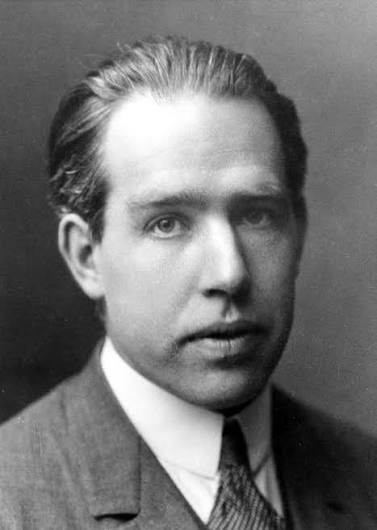
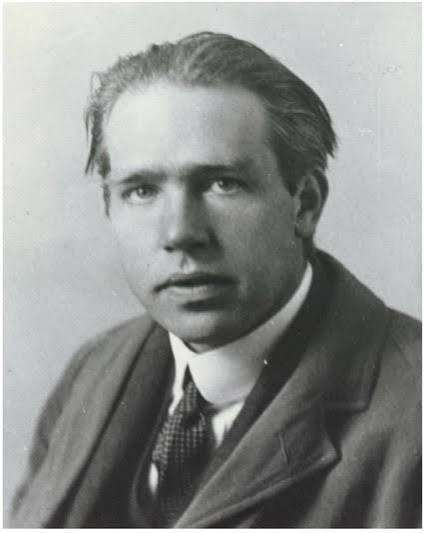
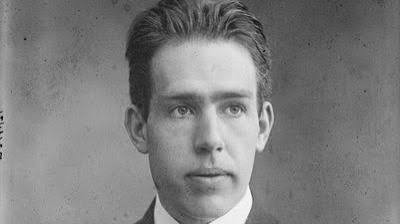
The following indicates the mindset of Bohr’s cabal:
“Also in May, Alexander Stern, an American physicist-engineer in residence at Bohr’s institute, wrote to Wheeler saying he had just given a seminar on Everett’s ‘erudite, but inconclusive and indefinite paper,’ and that Bohr had opened the discussion. Reflecting the tenor of that discussion, Stern commented that Everett, ‘lack[s] an adequate understanding of the measuring process. Everett does not seem to appreciate the FUNDAMENTALLY irreversible character and the FINALITY of a macroscopic measurement… It is an INDEFINABLE interaction.’
Stern flatly stated that wave collapse does not contradict the Schrödinger equation—as if the construct of wave collapse was included in the complementary model. Without bothering to comment on Everett’s technical arguments… Blinded by his assumption that measurement requires an external observer, Stern failed to appreciate that Everett was totally eliminating the role of external observation so crucial to Bohr’s interpretation… For Stern, indeterminism was quantum mechanics; he was not prepared to accord any validity to a theory that challenged the status quo, simply on the basis that it was not the status quo… Wheeler had seriously miscalculated: Bohr and his circle were not even remotely open to such a radical idea as a universal wave function… Wheeler copied Everett on his reply to Stern, attaching another pedagogical warning: ‘I have no escape from one sad but important conclusion: that your thesis must receive heavy revision of words and discussion, very little of mathematics, before I can rightfully take the responsibility to recommend it for acceptance…’
Continuing his flurry of letter writing, Wheeler wrote to Allen Shenstone, chairman of the physics department at Princeton: ‘I think [Everett’s] very original ideas are going to receive wide discussion…. Since the strongest present opposition to some parts of it comes from Bohr.’”
Peter Byrne, The Many Worlds of Hugh Everett III: Multiple Universes, Mutual Assured Destruction, and the Meltdown of a Nuclear Family, pp. 164–167
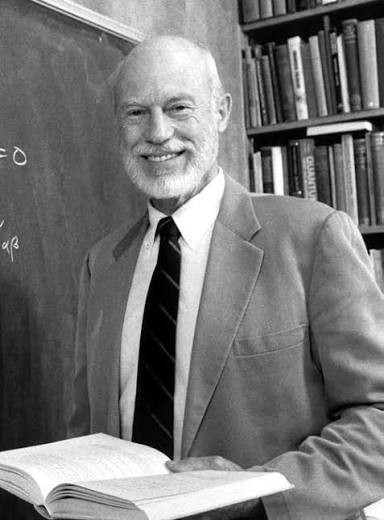
And, if the preceding quotes are not blatant enough to show how authority has suppressed the reality of wave mechanics:
“Regarding the editing of Everett’s paper, DeWitt remarked, ‘I asked [Wheeler] why the original article, I mean the [Urwerk], wasn’t ever published. Wheeler said, “Because I sat down with Everett and told him what to say.”’ DeWitt said, ‘The funny thing is, you have to read the Reviews of Modern Physics article very carefully, as I did, to see what’s really there. Whereas in the Urwerk it’s quite well spelled out, to me.’
In the end, after the rebellious, anti-Bohr comments in the original work were excised, along with much of the explanatory language, and much of the formal argument, Everett’s dissertation was accepted by Wheeler. He passed his oral exam with a ‘very good,’ the second highest rating, and became Dr. Everett.”
Peter Byrne, The Many Worlds of Hugh Everett III: Multiple Universes, Mutual Assured Destruction, and the Meltdown of a Nuclear Family, p. 176
The treatment of Hugh Everett is explained by the sociological analysis in part 2. The way he was managed by Bohr is not unique. The general pattern is articulated by Shi:
“Meanwhile, the power structure affects interaction among scientists, in that each scientist takes strategic action, and the outcome of interaction is asymmetric. If authority is defined as the voluntary compliance of people with the power that another has, the authority structure of a scientific community can be seen as the institutionalized distribution of power. According to Pfeffer (1981), the distribution of power in a scientific community is institutionalized because scientists come to believe that this is how things always were, always will be, and always should be. These shared perceptions lead scientists to accept the distribution of power or control as a social fact; those who do not accept the power distribution may be removed from the scientific community. In Pfeffer’s view, ‘power becomes institutionalized by a process which perpetuates not only the social reality of the distribution of power but also the various structures, procedures, and practices which reinforce the existing power structure’ (Pfeffer, 1981, p. 299). In the case of a scientific community, the power structure has some deep institutionalized origins in institutionalized motivation, functional preference, scientific exchange and reward system, and therefore it keeps turning into the authority structure that each scientist accepts as a legitimate institutional setting.”
Yanfei Shi (2001), The Economics of Scientific Knowledge: A Rational Choice Institutionalist Theory of Science, Edward Elgar Publishing, p. 211
Part 7 · Synthesis
Discussion
“We do not construct the external world to suit our own ends in the pursuit of science, but that vice versa the external world forces itself upon our recognition with its own elemental power.”
Max Planck, Where Is Science Going?, p. 198
How to Believe in Wave Mechanics
Assume that humans are made of the same kind of “particles” (matter waves) as everything else (mountains, oak trees, killer whales, electrons in the double slit experiment, the double slit detector board, etc., etc.). This assumption shows us that the Copenhagen collapse-based idea of measurement implies a second kind of particle which never enters into superposition and collapses superpositions upon encountering them. No such “classical” particle is known, nor can reasonably be supposed, to exist.
1) Electrons are waves
2) We’re made of electrons
3) We are waves
QED
But to stop here is boring. It is not thinking only of our own place in the world that makes science interesting; science is beautiful because it takes us beyond ourselves. I enjoy physics as an escape from the personal. For that reason, I will not dwell particularly on the implications of wave mechanics for our human experience. Those ideas will suggest themselves automatically after studying the physics in a general way. I have more fun thinking about reality as a whole. My favorite object to think about is the electron. And what is an electron anyway? It is not a point particle, as we have seen, but a kind of nexus, a node of relatively concentrated worldlines. And more fundamentally a knot in the underlying fluid-like flow of causality. A kind of interstitial fiber connecting other stable knots (protons) in this flow, forming an infinite-dimensional web we call causality.
Wheeler believed that Everett’s work was the key to solving quantum gravity, and this is of course correct. (How could Everett’s work not be essential in unifying QM with GR given that Everett’s formulation is the actual physical reality of QM?) When we step outside the Copenhagen frame and look at the physics directly, deep parallels between wave mechanics and general relativity begin to emerge of their own accord. Erwin Schrödinger developed wave mechanics in 1926. Six years prior to that Eddington wrote:
“A detached observer contemplating our world would see some events apparently causing events in their future, others apparently causing events in their past—the truth being that all are linked by determinate laws, the so-called causal events being merely conspicuous foci from which the links radiate.”
Sir Arthur Eddington (1920), Space, Time and Gravitation: An Outline of the General Relativity Theory, Cambridge University Press, pp. 51–52
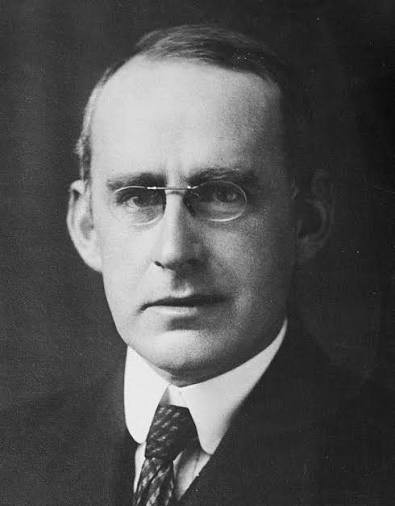
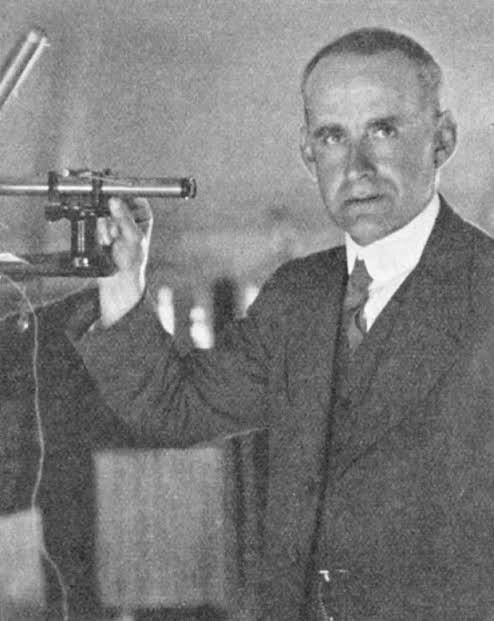
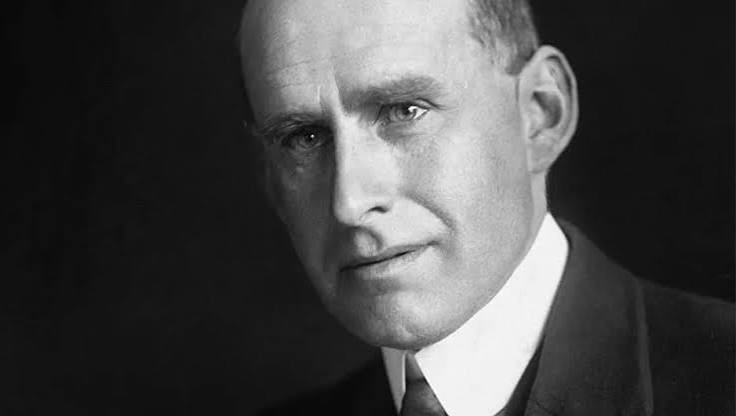
This physical picture in which multiple causal links radiate out from a “single event” reminds me very much of the wave-mechanical nature of the electron and yet it is born wholly from relativity theory. Indeed, we heard from Schrödinger earlier in part 3 where he said:
“The sameness of a particle is not an absolute concept. It has only a restricted significance and breaks down completely in some cases… the strings intermingle inextricably and reveal the true situation.”
Erwin Schrödinger, What Is an Elementary Particle?
This is resonant with the picture put forward by Eddington.
The importance of Everett’s work cannot be overstated. It reveals the physical meaning of our most fundamental and general theory. Physics will not progress beyond its current stage until it embraces the physical reality of wave mechanics. This has the certainty of a tautology: there can be no evolution in our understanding of Physics without believing in physics.
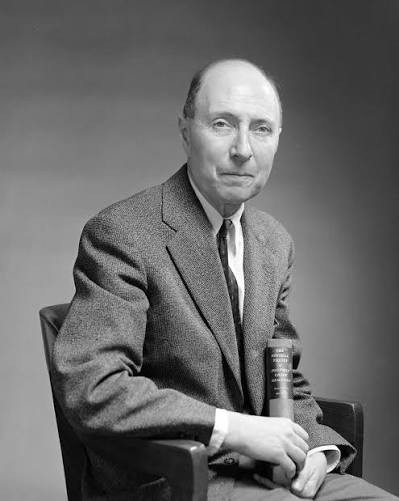
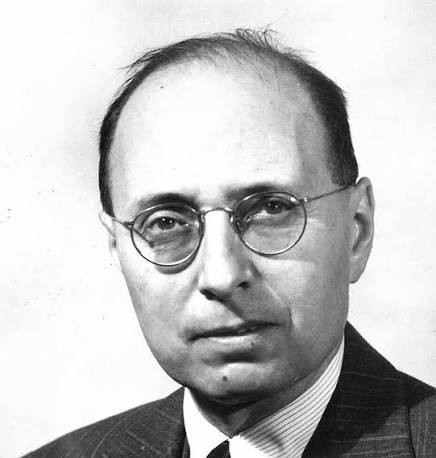
Nobel laureate Eugene Wigner recognized this:
“…to re-emphasize the ultimate scientific interest in the question [of wave function collapse], which is, perhaps, the most fundamental question of all.”
Eugene P. Wigner, “Remarks on the Mind-Body Question,” in Symmetries and Reflections, p. 184
Max Planck also saw this truth:
“…this question [of wave function collapse] is far from being settled and might prove more fruitful than any other question in physics… I think it unlikely that this manner [the Copenhagen interpretation] will continue to satisfy in the future.”
Max Planck, The Philosophy of Physics, pp. 38, 46
Hugh Everett solved “the most fundamental question of all” which I am convinced will “prove more fruitful than any other question in physics.” Because of the censorship of his 1957 thesis by Niels Bohr and his Copenhagen cronies, the physical meaning of Schrödinger’s wave mechanics remains unknown to most physicists today. In part 1 of this report we saw the power of thinking in physical pictures and analogies between physical pictures. In part 4 I will apply this philosophy to some physics I find interesting.